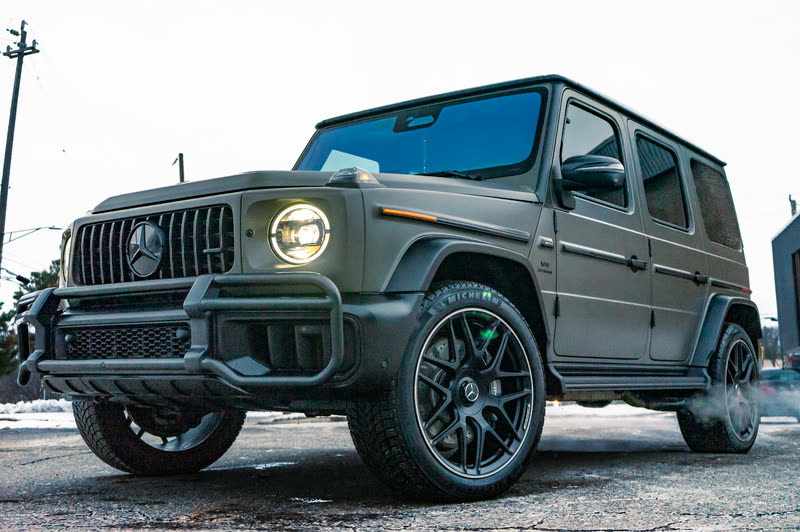
Is paint protection film worth it on a Michigan daily driver?
Whether PPF pays for itself depends on the car, the roads and how long you keep it.
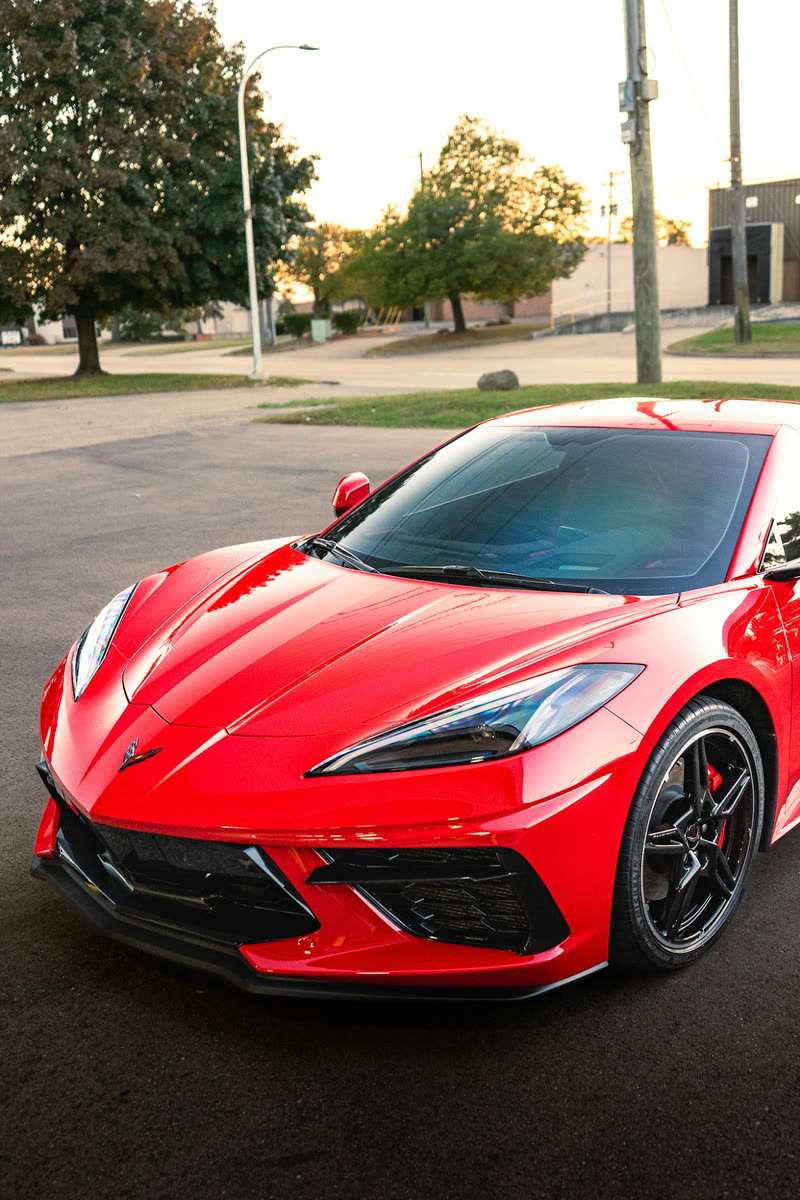
If you've spent any time researching paint protection film online, you've probably read fifteen versions of the same article. They all say PPF is great. They all show before-and-after photos of rock chips. And none of them seem to be written by anyone who has actually lived through a Michigan winter.
So let's do this differently. Is PPF actually worth it on a daily driver in Michigan?
The answer: it depends on three things, the car you drive, the roads you drive on, and how long you plan to keep the vehicle. At the shop we start from the same three questions.
What PPF actually does
Paint protection film is a clear, self-healing urethane layer that bonds to your paint. It absorbs the kind of damage that would otherwise reach your clear coat, rock chips, road debris, salt spray, bug etching, brake dust, light scratches from washing.
The film takes the hit. Your paint stays factory.
On a daily driver, especially in Michigan, that matters more than people realize. The damage isn't from one dramatic event, it's accumulated, mile by mile, over years of commuting on I-275 and Telegraph and Schoolcraft. By the time you notice, your front bumper looks like it's been sandblasted.
The Michigan-specific case for PPF
Michigan is uniquely hard on paint. We've got three forces working against your finish at all times:
- Road salt and brine. Every winter, MDOT and county crews dump magnesium chloride and rock salt on every major road. It chews through paint and metal alike, especially in the lower body, rocker panels, and behind the wheels.
- Pothole shrapnel. Anyone who's driven Michigan in March knows the front bumper and hood take an absolute beating. Loose asphalt gets thrown up by traffic ahead of you, and at 70 mph it leaves real marks.
- Sand and gravel from winter treatment. Long after the snow's gone, the sand stays. Highway driving in April still feels like a low-grade sandblast.
A bare clear coat takes all of that. PPF takes it instead.
When PPF pays for itself
This is where we get specific.
It pays off on cars you're keeping
If you're going to own the vehicle for 5+ years, PPF makes financial sense on almost any car worth more than $30K. The film outlasts the period when paint damage would have accumulated to "needs touch-up paint or repaint" territory. A repaint on a single panel, done right, runs $800 to $1,500. A bumper repaint plus blending can run $2,000+. Two or three of those over the life of the car, and the math swings hard.
It pays off on cars with expensive paint
Manufacturer-special colors, anything matte, anything tri-coat, anything from an exotic, are extraordinarily expensive to repaint correctly. Ferrari Rosso Corsa or any Lamborghini bright is one thing; even a special-order BMW Individual color or a Porsche PTS option can run thousands per panel to match properly. PPF preserves the original factory finish, which is irreplaceable.
It pays off on cars you actually care about
Even on cars where the math is less obvious, there's something to be said for opening the car door at the grocery store and not flinching when the cart rolls past. With PPF you stop noticing every parking lot. You stop avoiding gravel. You drive the car like a car.
When PPF probably isn't worth it
We'll tell you straight: there are situations where we wouldn't push it.
- Lease vehicles. If you're returning the car in 3 years, full PPF is probably overkill. A front-end package might still make sense to avoid lease-end paint charges, but Full Body is hard to justify.
- Cars with existing paint damage. PPF is best applied to a near-perfect surface. If your paint is already heavily marred, you're paying for correction and film. Sometimes the right move is correction now, film later.
- Vehicles you're going to flip soon. If you change cars every 18 months, the return on full PPF gets thin.
What we usually recommend for daily drivers
For a Michigan daily driver you'll keep 4+ years, our most common recommendation is what we call Track Pack, full front end plus the lower body (rocker panels, lower door panels, leading edges of the wheel arches). It covers the 90% case: the high-impact zones plus the salt-spray zones.
If the car's parked outside and sees long highway commutes, we'll often add the A-pillars and roof leading edge. Bugs and stones from semi-trucks reach further than people think.
Full Body coverage is for situations where the car is irreplaceable, limited-production vehicles, exotics, daily drivers with collector potential, or cars where the owner just wants the answer to "is it protected?" to be "yes, completely."
Summary
For most Michigan drivers with a vehicle they're keeping, PPF earns out. Not because of one dramatic save, though those happen too, but because over years of ownership, your paint stays factory and the resale conversation gets a lot easier.
The trick is sizing the coverage to your actual situation. Talk to someone who will tell you what you need and what you don't. If you want to walk through your specific car and use case, we're happy to do that, most quotes come back the same day.
About DYNFX. DYNFX is a paint protection film, ceramic coating, window tint and paint correction shop at 33801 Schoolcraft Rd in Livonia, MI. We serve metro Detroit, Oakland County and the Ann Arbor area. Authorized Autobahn installer. BBB-accredited. Paint protection film · Ceramic coating · Window tint · Paint correction.